// Why Die Bonding Fails to Scale: How Do You Move from Prototype to Production Without Starting Over?
In advanced packaging, the real challenge usually doesn’t show up during development. It shows up when processes need to run reliably in production.
Everything works in the lab.
Then production begins.
And suddenly, nothing behaves the same.
But in many cases, the issue was already built in. If the bonding strategy is not validated with production in mind, cost and risk are carried forward from the very beginning.
That is why problems appear later.
If a process is not designed for production from day one, it will have to be redesigned later.
The process is no longer stable or consistent enough to meet yield targets, and what looked finished turns into another round of process work.
At that point, it’s no longer just a technical issue. It affects qualification timelines, customer commitments, and revenue.
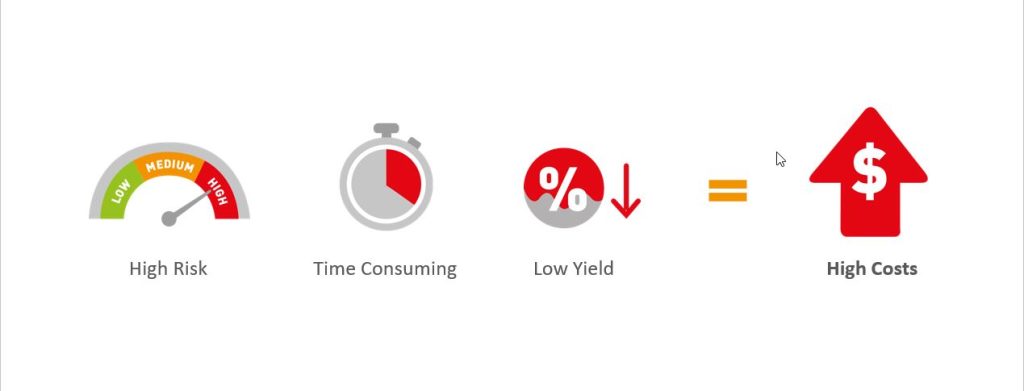
Typical outcome when die bonding processes are not designed for transfer from R&D to production: higher risk, longer development cycles, lower yield and increasing cost.
Everything Works. Until It Doesn’t.
The turning point is predictable:
First customer or qualification builds
Pilot runs moving to volume
Multiple device variants on one line
Development today already relies on high-precision die bonders. Accuracy is not the issue.
The issue is transfer.
Example: Silicon photonics transceiver assembly
A laser diode is aligned to a photonic integrated circuit with sub-micron accuracy. In R&D, performance is stable.
In production, small deviations and thermal effects accumulate, and yield becomes less predictable.
A common situation: the process is qualified in R&D but needs adjustment again on the production system.
This is where process drift begins.
Where Scaling Breaks Down
The issue is not the process itself, but the environment it runs in.
Different systems
Different software
Different process logic
At the same time, production requirements are becoming more complex.
Teams are no longer working on a single, fixed process. Instead, they need to handle increasing variation, whether in silicon photonics for datacom and AI, LiDAR, IR sensors, MicroLED displays, or SiC and GaN power devices, depending on their specific application and production environment.
On top of that, multiple bonding technologies need to be combined, and setups have to change frequently in high-mix manufacturing.
Each transfer between systems introduces variation that affects stability, increases development effort, and ultimately drives cost.
Stay in One Ecosystem
A more robust approach is to align development and production from the start.
In practice, this means choosing a platform in R&D that already reflects production behavior.
The key benefit: validated processes can be transferred directly into production without a second development loop. That is what ultimately determines whether a process scales or not.
This also enables:
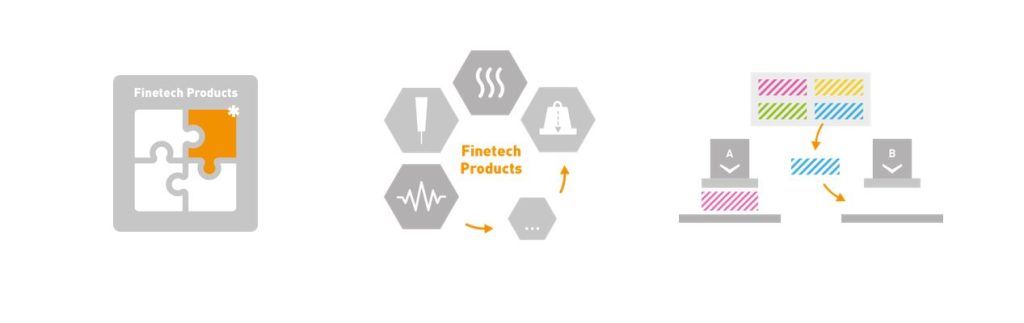
Multiple processes on one system
Fewer handling steps
Less variation during transfer
It shortens development cycles and stabilizes yield earlier, because what is learned in R&D carries directly into production.
This also speeds up learning cycles, as every iteration in R&D directly contributes to a production-ready process.
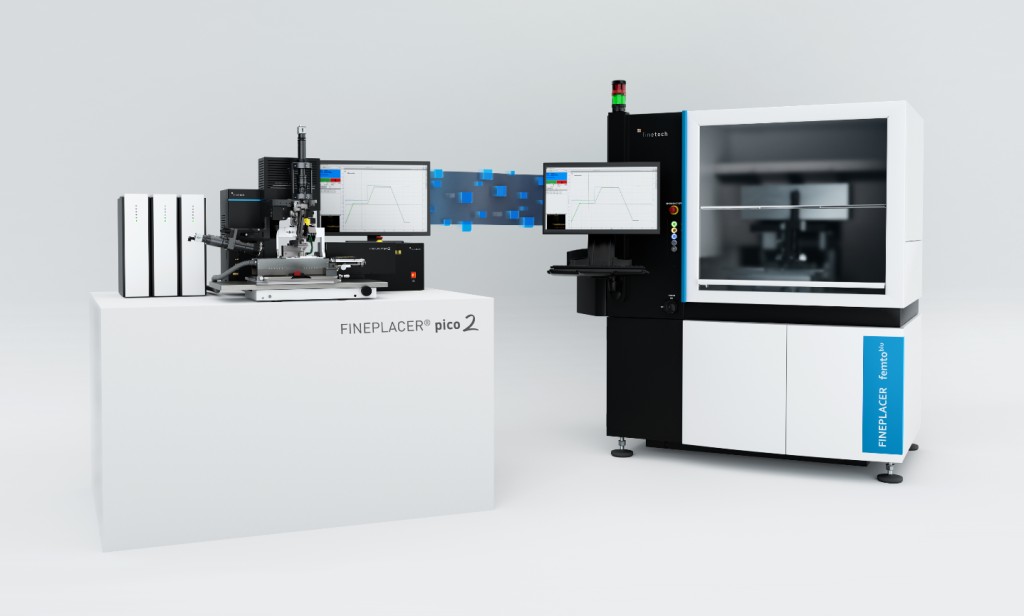
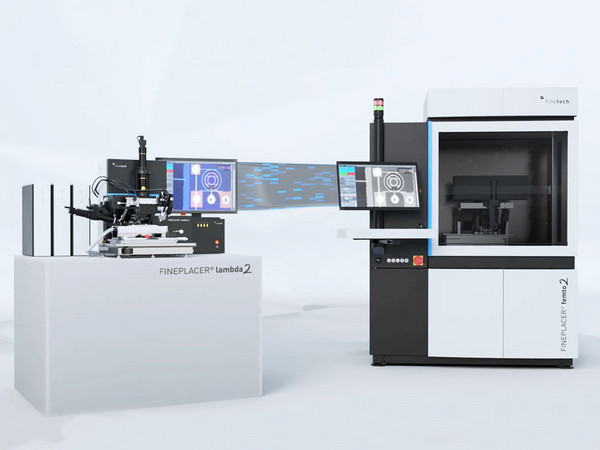
Cross-system unified hardware and software platform
In development, the IR detector die is aligned to a ROIC and bonded via indium bumps. Alignment accuracy, bonding force, temperature profile, and gap control are optimized and stored as a process recipe.
In production, the same alignment and bonding parameters are reused, while automated handling ensures consistent placement and continuous operation.
The interface stays the same. Only throughput and repeatability increase.
Finetech’s prototype to production approach allows for a streamlined, cost-effective and risk-minimized transition from prototyping to production
What to Check Before You Scale
Before moving into production, ask:
Can the process run unchanged over longer production cycles?
Are all parameters clearly defined and reproducible?
Does your R&D die bonder reflect production behavior?
Can your production system handle multiple products and processes?
If not, expect additional process work, longer timelines, and higher cost.
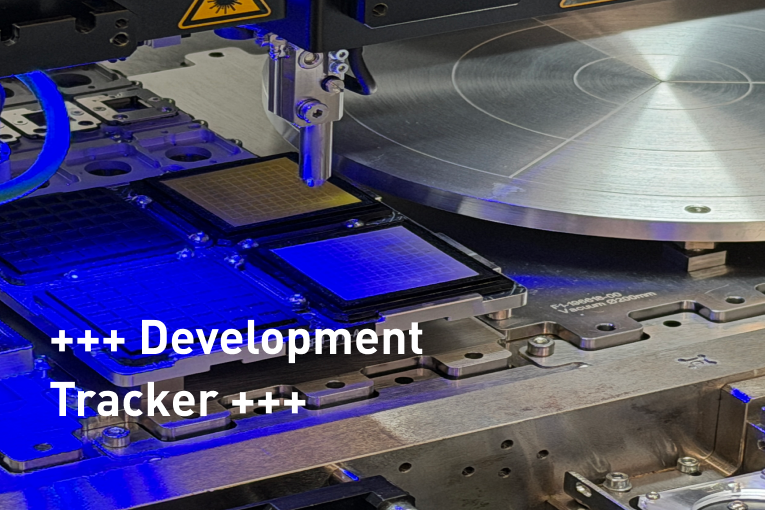
Follow the ongoing development of our next-generation production die bonder for high-mix manufacturing. This tracker collects the latest updates, engineering milestones, and insights as the platform advances with 12-inch readiness…
Finetech's "Prototype-to-Production" approach enables fast, creative and flexible product development and seamless process transfer from R&D to production, saving you time and minimizing technological and financial risks.